Non-Chord Tones and Approach Tones
Introduction
Welcome to lesson 6!
This week we will be seeing how non-harmonic tones are used in classical and contemporary styles of music. These will include non-chord tones such as passing tones, neighbor tones, escape tones, free tones, and the appoggiatura. We'll dig further by learning the basic process for harmonizing approach tones in a melody and outlining a process for harmonizing the approach tones.
Finally, we'll be asking three new composers on how they approach starting a composition.
Objectives
By the end of the lesson, you will be able to:
understand the relationship of non-chord tones to the prevailing harmony
identify the different non-chord tones such as passing tones, neighbor tones, escape tones, free tones, appoggiatura, etc.
understand the distinction between classical non-chord tones and contemporary approach tones
identify approach tone patterns and recognize them in context
understand a basic process for harmonizing approach tones in a melody
understand and comment on how a selection of professional composers control dissonance and consonance in their compositions using tensions and non-chord tones
Embellishing the Harmony: The Phenomenon of Non-Chord Tones
 Plain Shoe |
 Totem Sneakers |
Sometimes, when choosing shoes, people prefer the elegance and grace of simplicity. Other folks like to walk on the wild side and make a bold and embellished statement. And then, of course, there is the great middle ground that is neither understated and simple, nor glaring and bold—it is pleasingly functional. We can think of melodies in the same way. A clear and simple melody, such as the opening melody of Johann Strauss Jr.'s "Blue Danube Waltz," can be lovely to listen to. Strauss chose to use chord tones for the melody and we don't hear a non-chord tone until many bars into the main theme. Because of its light and buoyant mood, this music was chosen to represent the weightlessness of space in a scene from Stanley Kubrick's 2001: A Space Odyssey.
The Opening Melody of Strauss' "Blue Danube Waltz":
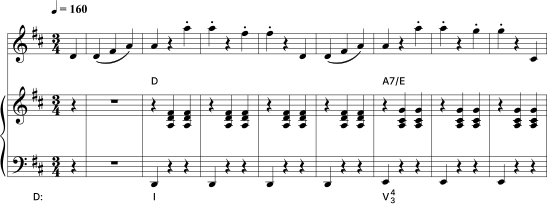
As the composition picks up momentum Strauss adds a number of melodic non-harmonic tones as embellishments. We'll return to this piece and explore those embellishments a bit later in this topic.
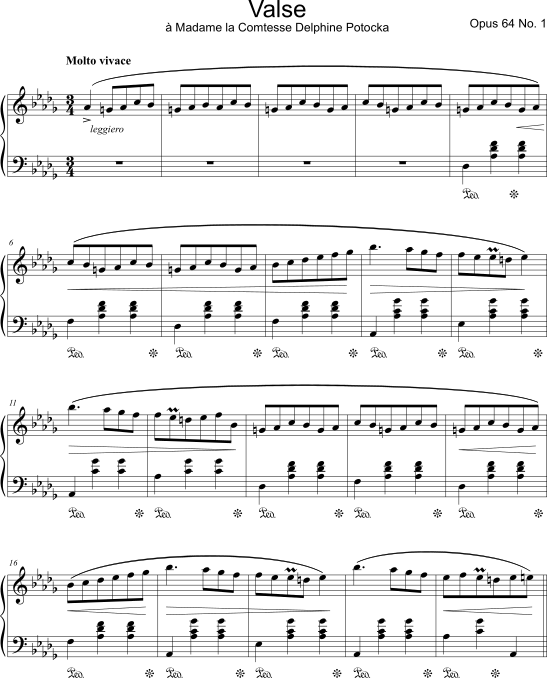
On the other end of the embellishment spectrum is Chopin's "Minute Waltz" in D
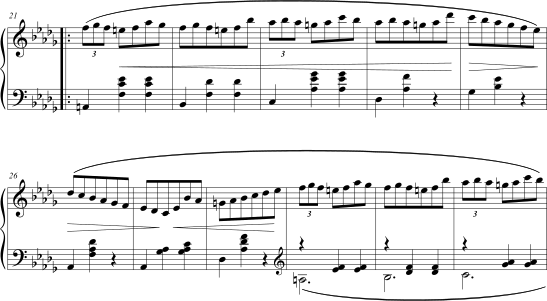
The opening bars in Chopin's waltz use a similar harmonic progression (I to V7) as does Strauss. However, the resulting sound is vastly different, partly due to Chopin's use of embellishments.
We'll review the non-harmonic tones that were introduced in the first level of Music Theory and Composition and add some new embellishments to our melody paintbox.
Chopin Opus 64 No. 1:
Non-Harmonic Tones Review, Part 1
Let's review the non-harmonic tones presented in Music Theory and Composition 1.
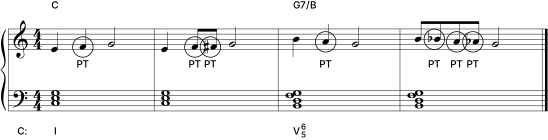
Passing Tones
Passing tones connect chord tones by step. They can be diatonic or chromatic. It is possible to have more than one passing tone between chord tones. Passing tones are labeled PT.
Neighbor Tones
Neighbor tones leave a chord tone by step and return to the same chord tone by step. Neighbor tones can be diatonic or chromatic. They will often be referred to as either being an upper neighbor tone or a lower neighbor tone. Neighbor tones are labeled NT.
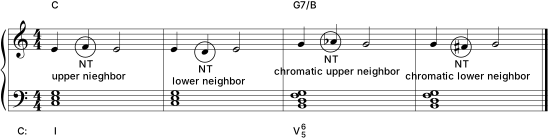
Anticipation
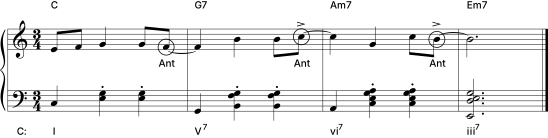
An anticipation is a chord tone that sounds immediately before the chord in which it is a member. It's like a guest who arrives early, before the party is supposed to begin. It sets the tone, literally! Anticipations are labeled Ant.
Suspension
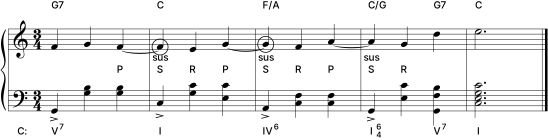
Suspensions are three-note patterns that begin with a consonant note (usually a chord tone), that are held or repeated, creating a dissonance, and then resolved down by step. The three notes are called the preparation, suspension, and resolution. Suspensions are labeled sus.
Non-Harmonic Tones Review, Part 2
Next, let's explore some other non-harmonic tones that you can add to your musical paint box.
Double Neighbor Tones
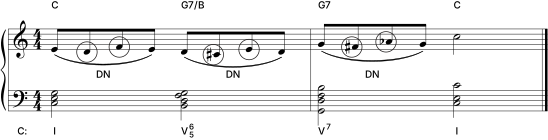
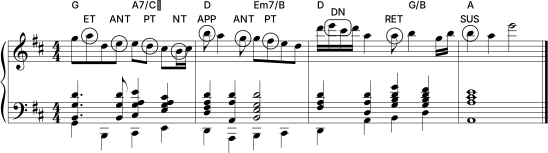
As the term implies, double neighbor tones are similar to having a neighbors living on the left and right of your house, or perhaps, a better analogy would be to think of it as having neighbors living above and below your apartment. Double neighbor tones have two consecutive non-chord tones and are labeled DN. In the example below, the first bar has two diatonic double neighbors, the second bar is mixed with a diatonic and chromatic neighbor, and the third bar has two chromatic neighbors. Note that the double neighbor patterns begin with a chord tone, move stepwise above or below the chord tone, leap above or below the chord tone to a note a step away, and then return to the chord tone. You may also hear the double neighbor group referred to as "changing tones."
Retardations
Retardations are suspensions that resolve upward rather than downward. Retardations follow the same pattern as suspensions by having a preparation, dissonance (the retardation), and a resolution. Although they can occur anywhere, retardations are most commonly found at a cadence point. Retardations are labeled ret. In Example 8, you may be tempted to analyze the retardation B as the major 7th of the C major chord. However, in Classical times, 7ths were regarded as dissonances that were resolved downward by step. Since this B resolves upwards to C, the Classical period musician would have considered the B as a lingering note from the G7 chord that became a momentary dissonance on the C major before it resolved upwards.
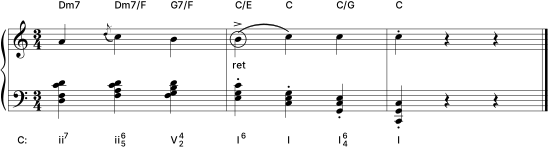
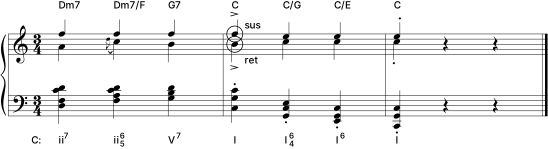
Retardations were often coupled with suspensions. This made the lingering function more apparent. You can hear and see this coupling in the following example that adds the 4-3 suspension to the previous example.
Retardation Coupled with a 4-3 Suspension:
Appoggiatura
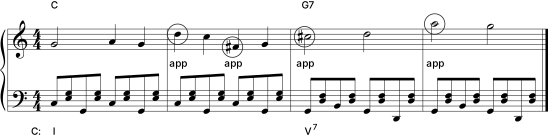
Appoggiaturas are non-harmonic tones that are approached by leap and resolved by step. In most cases, the appoggiatura falls on a strong beat, thus accentuating the dissonance and making the resolution even more delicious. Because of this dissonant weighting, the appoggiatura is also called a "leaning tone." The appoggiatura may resolve either upwards or downwards. The leaning tone may be diatonic or chromatic. The chromatic leaning tone creates even more tension and a need for resolution than a diatonic leaning tone. An appoggiatura is labeled app.
Escape Tone
An escape tone is the opposite of an appoggiatura in that the escape tone is approached by step and left by leap. Generally, the leap is in the opposite direction than the step. Unlike the appoggiatura, the escape tone is most often found on a weak beat or subdivision of the beat. The escape tone is labeled ET.
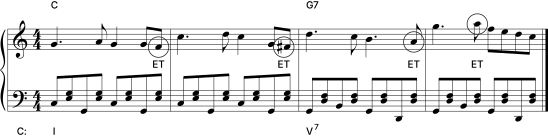
Table of Non-Harmonic Tones
Types |
Label |
Approach |
Resolution |
Direction |
|---|---|---|---|---|
Passing Tone |
PT |
Step |
Step |
Similar |
Neighbor Tone |
NT |
Step |
Step |
Reverse |
Anticipation |
Ant |
Step |
Repeat |
Up or Down |
Suspension |
sus |
Repeat |
Step |
Down |
Retardation |
ret |
Repeat |
Step |
Up |
Double Neighbor |
DN |
Step/Leap |
Step |
Reverse |
Appoggiatura |
app |
Leap |
Step |
Reverse |
Escape Tone |
ET |
Step |
Leap |
Reverse |
Bach’s "Jesu, Joy of Man’s Desiring" and "Air on the G String" use of Non-Harmonic Tones
Now that you have a new collection of non-harmonic tones in your musical paintbox and ear, let's look at two pieces of music that use these to great effect.
Jesu, Joy of Man's Desiring
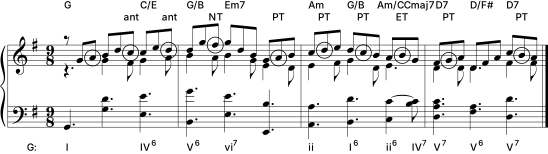
Bach's "Jesu, Joy of Man's Desiring" is a beautiful piece whose simple poignancy may be partially due to the unobtrusive, yet copious, use of non-harmonic tones. The embellishing tones don't draw too much attention to themselves, but they do add an element of tension and release to give the piece forward-motion.
Excerpt from Bach's "Jesu, Joy of Man's Desiring":
Air on the G String
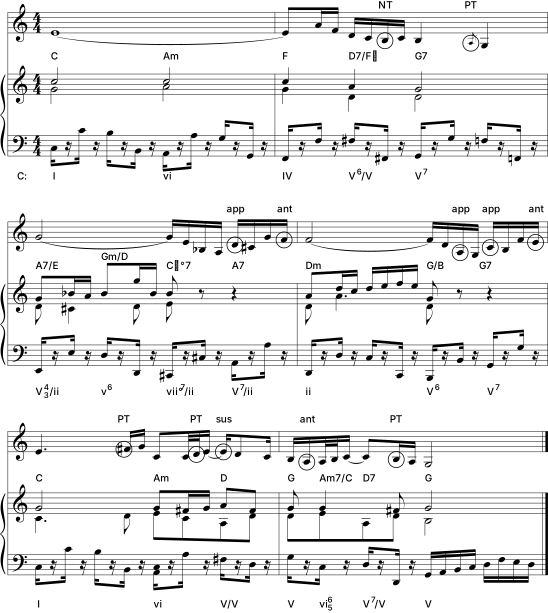
Bach's "Air on the G String," the composition that was played in the intro to week 6, is an example of Bach's lyrical style of melody writing. The piece includes many non-harmonic tones, giving it a beautiful, angular, singing quality.
Excerpt from Bach's "Air on the G String":
Johann Strauss Jr.’s "Blue Danube Waltz" Use of Non-Harmonic Tones
Johann Strauss Jr. and Johannes Brahms
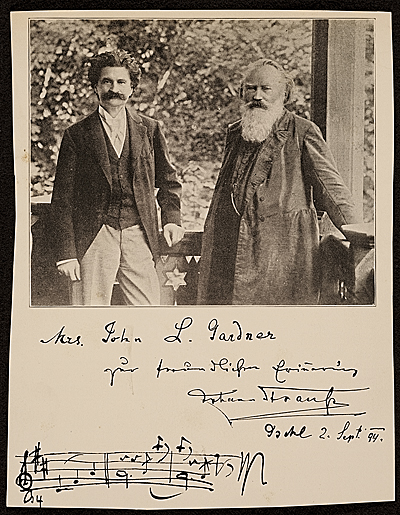
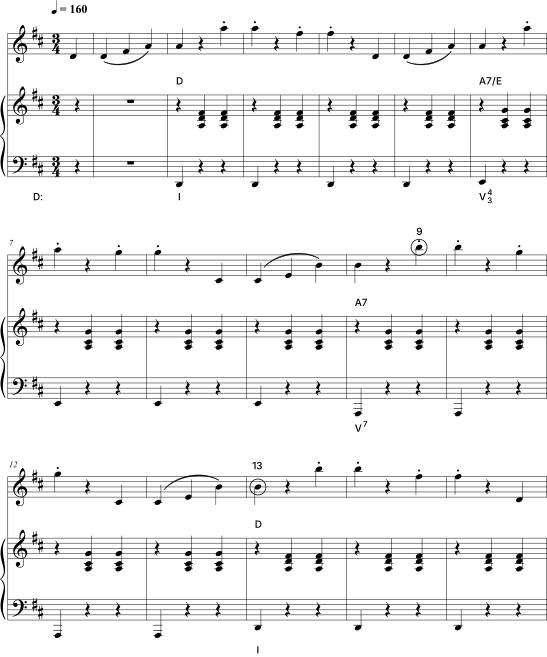
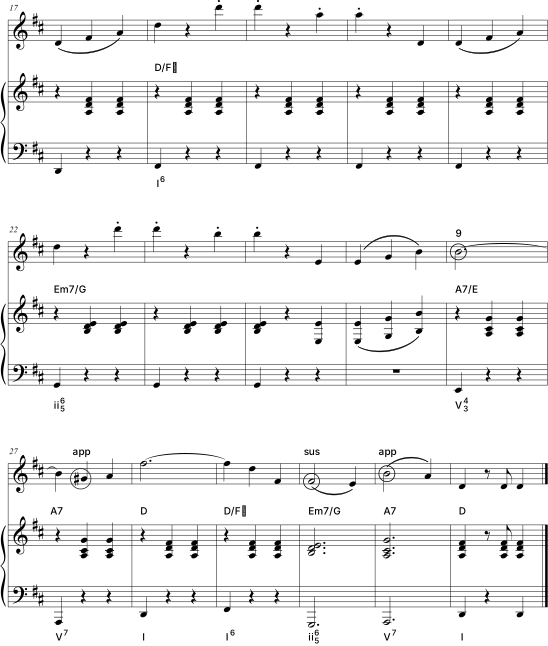
After its opening chord-tone melody, Johann Strauss Jr.'s "Blue Danube Waltz" begins to add non-harmonic tones as the piece develops. Johann Strauss Jr. (1825-1899) was nicknamed "The Waltz King." What's interesting about this waltz is that Strauss uses an unresolved 9th in the melody (bars 10 and 11) and an unresolved 13th (bars 14 and 15). This had become acceptable by the mid-19th century. There is another 9th (B) in bar 27 that indirectly resolves to the root (A) via a weak-beat appoggiatura (G
"Blue Danube Waltz":
Workshop: Non-Harmonic Tones
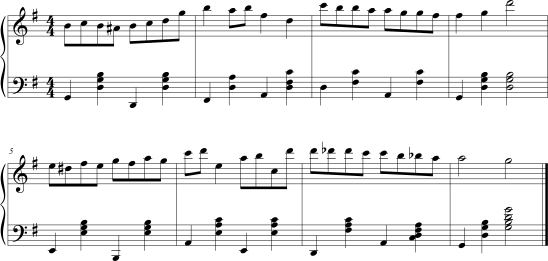
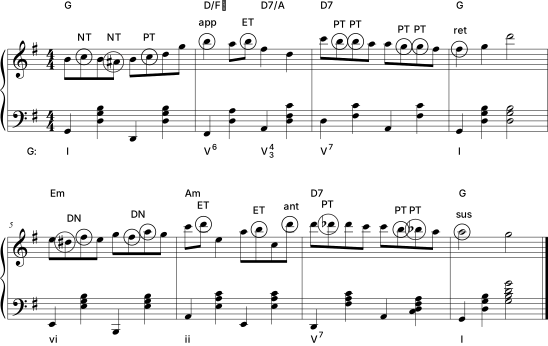
To check your understanding of this topic, analyze the following example using Roman numerals and chord symbols, then label the non-harmonic tone embellishments.
Download Non-Harmonic Tones worksheet (PDF)

Adding Spices—Non-Harmonics Applied
If you don't use enough spice in your cooking, you'll create a bland dish. If you're making porridge, that may be perfect, but if you're making Indian food or Thai cuisine, you probably will want to be more liberal with your spices.

Spices and Herbs
Adding non-chord tones to music is similar. The right amount depends on the musical dish you're planning to serve.
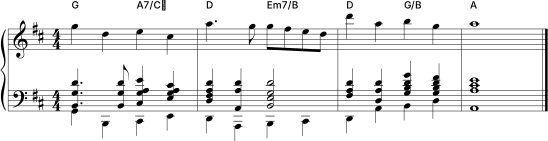
Let's apply some non-chord-tone strategies and possibilities and see the results. We will be using the melody and chords below for the topic examples.
Sample Melody and Chords:
Passing, Neighboring, and Double Neighboring Tones
Passing Tones
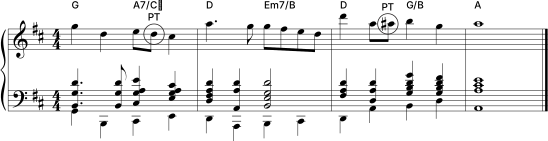
As you've learned, passing tones may be diatonic or chromatic. They are approached by step and resolved by step in the same direction. When there are two adjacent chord tones, you can add diatonic passing tones to connect them. And, you can also add chromatic passing tones between diatonic seconds if they are a whole step apart.
Look for passing tone possibilities in the first example and add at least one diatonic and one chromatic passing tone.
There will be many possible solutions to all of the examples.
Below is one possible Passing Tone solution:
Neighbor Tones
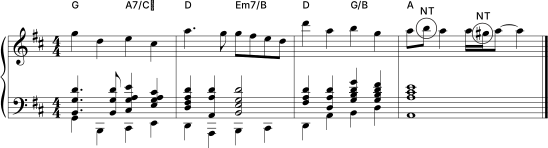
Neighbor tones are approached by step and resolved by step by returning to the starting note. Neighbor tones can be diatonic or chromatic. Almost any chord tone can have an upper or lower neighbor. The exception in classical music is when the 7th is used as a chord tone. The diatonic upper neighbor of a 7th is the root of the chord and would therefore not qualify as a non-harmonic tone. The same is true for lower neighbor of the root of a chord. Its lower neighbor would be the 7th of a chord and will often act as a chord tone.
Look for neighbor tone possibilities in first example and add at least one diatonic and one chromatic neighbor tone.
Below is one possible Neighbor Tone solution:
Double Neighbor Tones
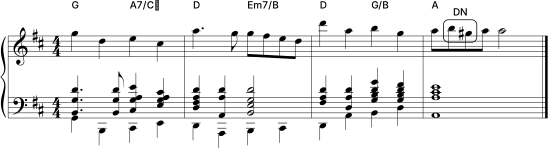
Double neighbors are a four-note combination in which a chord tone has a neighbor both above and below. They can be diatonic or chromatic. The first neighbor is approached by step, the second neighbor tone is approached up or down by leap, and the second neighbor resolves by step to the starting pitch. Any chord tone can have double neighbors. Double neighbor tones are also called "changing tones."
Look for double neighbor tone possibilities in the first example and add either one diatonic or a chromatic double neighbor group, or a double neighbor with both diatonic and chromatic neighbors.
Below is one possible Double Neighbor Tone solution:
Anticipations and Appoggiatura
Anticipations
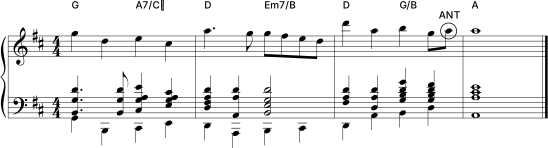
An anticipation can be approached from any note. It resolves into its target chord. To create an anticipation, find where the chord changes and arrive on a chord tone of the new chord before the full chord is sounded. An anticipation can't be a chord tone of both the preceding chord and target chord.
Look for anticipation possibilities in the first example and add at least one anticipation.
Below is one possible Anticipation solution:
Appoggiatura
Appoggiaturas are approached by leap and resolved by step in the opposite direction. They are also called "leaning tones" because they usually occur on strong beats and the dissonance "leans" into the chord before resolving.
To create an appoggiatura, find a chord tone on a strong beat that can be approached by leap. The appoggiatura can resolve up or down in the opposite direction of the leap.
Look for appoggiatura possibilities in the first example and add at least one appoggiatura.
Below is one possible Appoggiatura solution:
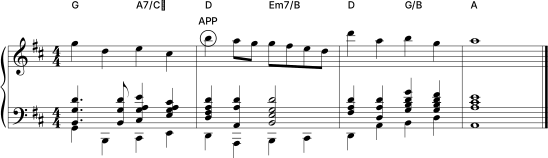
Escape Tones, Suspensions, Retardation Suspension
Escape Tones
Escape tones are the opposite of appoggiaturas. They are approached by step and resolved by leap in the opposite direction.
To create an escape tone, find a chord tone that moves to another chord tone at least a 3rd away, step up or down (depending on which direction the next chord tone is), and leap to the target chord tone.
Look for escape tone possibilities in the first example and add at least one escape tone.
Below is one possible Escape Tone solution.
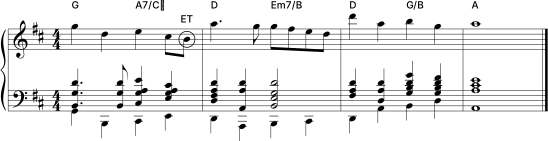
Suspensions
Suspensions are approached by a common tone, held as a suspension, and then resolved down by step (Preparation, Suspension, Resolution = PSR).
To create a suspension, find (or create) a chord tone that moves stepwise down to another chord tone, hold the first chord tone, and then resolve it down by step. The most typical suspensions are 4-3 and 9-8.
Look for suspension possibilities in the first example and add at least one suspension.
Below is one possible Suspension solution:
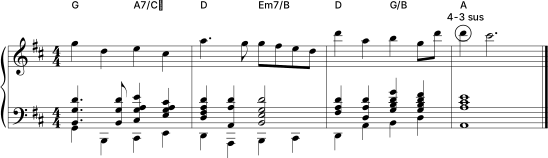
Retardation Suspension
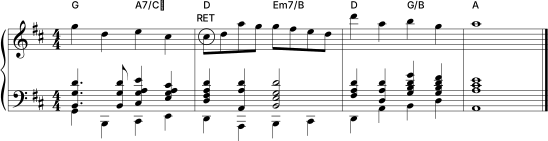
The retardation suspension (often just called a retardation) is a suspension that resolves up instead of down.
To create a retardation suspension, find (or create) a chord tone that moves stepwise up to another chord tone, hold the first chord tone, and then resolve it up by step. The most typical retardation suspension is the 7-8.
Look for suspension possibilities in the first example and add at least one suspension.
Below is one possible Retardation Suspension solution:
Lastly, try adding non-harmonic notes to the first example. Be warned though: it may be too spicy for general consumption!
Below is one solution:
Approaching the Target: Defining Approach Tones in Contemporary Harmony
Earlier in this lesson we learned about the distinction between classical non-chord tones and contemporary approach tones. In this topic we will identify approach tone patterns and recognize them in context.
Approach Tones Harmonized
Listen to the audio for this Basie style example:
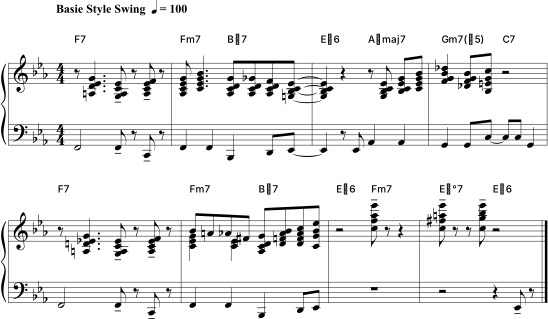
This is a short excerpt in the style of the great Count Basie Orchestra. The melody has been harmonized for the most part in four-way close voicings (with tension substitutions). Almost all of the notes in the melody agree with the accompanying harmony. Two notable exceptions would be the A and F
In the example that follows, each tone that is indicated with an arrow has been identified as an approach tone and has been harmonized to gravitate more strongly to the chord that follows it. Listen to the effect.
Basie Example with Approach Tones Harmonized:
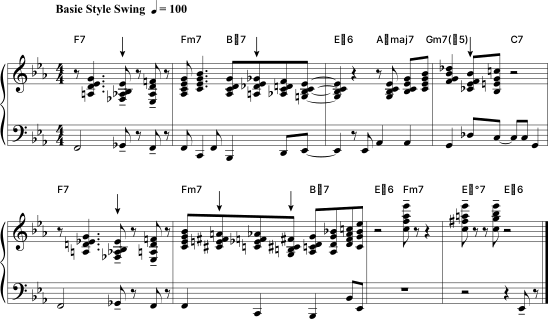
The harmonization of the approach tones creates a more elaborate effect than just the chords of the prevailing harmony. It contributes a lot to the sophisticated effect of this selection. In this topic we'll learn to analyze a melody to find its approach tones. Approach tones look like the non-chord tones studied earlier in this lesson. They fall into passing, neighbor and double neighbor patterns. There is however, a significant difference in the way that these terms are used in contemporary practice. In the Common Practice Period (i.e. classical music) the harmonic style was oriented to the simpler sound of the triad. Passing tones, neighbor tones, etc. were defined as dissonant non-chord tones. But in contemporary practice we have a much freer approach to dissonance (i.e. harmonic color or tensions) and so the distinction between chord tone and non-chord tone is of less significance. In contemporary harmony, the difference between target tones and approach tones is one of rhythmic placement.
In every melody, some notes fall on the points of metrical stress and some don't. This establishes a hierarchy of importance among the notes of the melody. Because the chords of the accompanying progression also sound at the points of metrical stress, the notes that coincide with the changes of harmony (called target tones) seem most prominent to the listener. The notes that come in between the stresses (called approach tones) are less prominent. In essence, the approach tones create a sense of melodic motion toward the target tones.
Distinguishing Targets and Approach Tones Rhythmically
In the melody in the example below, the speed at which the notes change is at the metrical level: all the notes coincide with the beats of the meter. The target tones fall on strong beats 1 and 3 and the approach tones on weak beats 2 and 4.
Metrical Level—Target and Approach Tones:

In the following example, the melody notes change at the super-metrical level: the melody uses rhythms which are longer than the unit of the beat.
Super-Metrical Level:

In a melody in which rhythms are at the super-metrical level, the target notes coincide with the stronger beat 1 and the approach tones come on the weaker beat 3, as in the next example.

In the following example the melodic rhythm moves at a rate faster than the speed of the meter: this melody is said to be at the sub-metrical level. The target tones come on the beat; the approach tones are on the off-beats.

The next example shows a melody that uses a mixture of different rhythms.
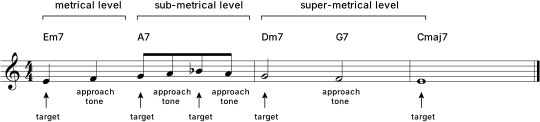
Notice that the distribution of target and approach tones changes as the level of rhythmic activity changes.
Categories of Approach Tones
In order for a note to be considered as an approach tone, it must also fall into one of a number of intervallic patterns.
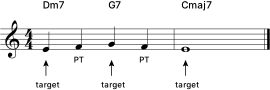
A passing tone (PT) is an approach tone that leaves a target by step and resolves by step, filling the gap of a third.
Passing Tones:
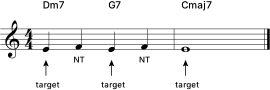
A neighbor tone (NT) is an approach tone that leaves a target tone by step and returns to the same note.
Neighbor Tones:
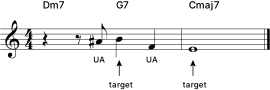
An unprepared approach tone (UA) or free neighbor tone is an approach tone that comes after a silence (rest) or a melodic leap and then resolves by step to a target tone.
Unprepared Approach Tones:
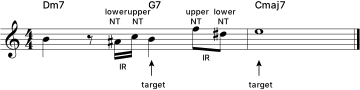
An indirect resolution (IR) is the result of two unprepared approach tones, the lower and then the upper neighbor (or the upper and then the lower neighbor) preceding a target tone.
Indirect Resolution Tones:
Double chromatic passing tones (DCPT) fill in the gap of a third between two target tones.
Double Chromatic Passing Tones:
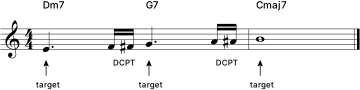
Because target tones generally coincide with the strong rhythmic stresses and the changes of harmony, they are always chord tones or available tensions of the chords to which they relate.
Notice in the example below that the target tones are either available tensions or chord tones of the harmonies to which they correspond.
Targets Agree with the Harmony:
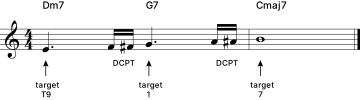
Approach tones may be any note of the chromatic scale, whether available or not. Notes that are very dissonant in relation to the chord are often of brief duration, or in the least rhythmically accented position in the bar.
Approach Tones May Be Any Note:
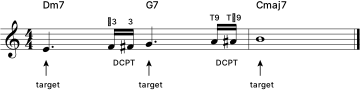
Notice in the previous example that the double chromatic passing tones are
Melody notes that fall into weak rhythmic positions in the bar and do not fall into one of the approach tone patterns are often arpeggiated figures that consist of chord tones and/or available tensions. In order for a note to be considered an approach tone, it must fall into one of the recognizable approach tone patterns:
Passing Tone (PT)
Neighbor Tone (NT)
Unprepared Approach (UA)
Indirect Resolution (IR)
Double Chromatic Passing Tone (DCPT)
Analyzing the Melody/Harmony Relationship
When analyzing the melody/harmony relationship for approach tones, follow this procedure:
Look for the metrical level(s) of rhythmic activity (metrical, sub-metrical, or super-metrical) of the passage.
Identify the target tones.
Label the relationship of the target tone to its corresponding harmony.
Identify the approach tones.
Determine their patterns and label them accordingly.
Approach Tone Analysis:
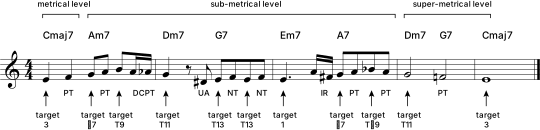
Syncopation and Rhythmic Anticipation
In musical styles that have syncopated rhythms, target tones will often anticipate the strong stresses.
Rhythmic Anticipations:
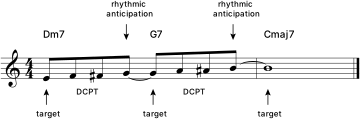
When eighth notes come on the "and" of beat 2 or the "and" of beat 4 and are tied over, listeners perceive the melody to anticipate the next harmony. This will cause our sense of where the target falls to shift slightly forward, rhythmically.
Rhythmic Anticipations Shift the Targets:
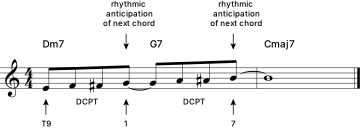
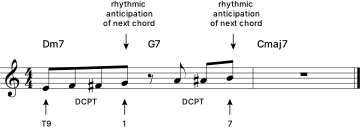
Even if eighth notes on the "and" of 2 or the "and" of 4 come before a silence (rest), listeners will still perceive the targets to be shifted forward rhythmically and anticipate the next chord change.
Rhythmic Anticipations before Rests:
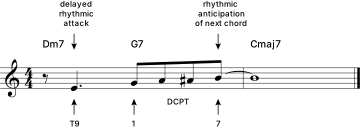
A delayed attack can also shift our perception of the target tone slightly.
Delayed Rhythmic Attack:
Workshop: Approach Tones
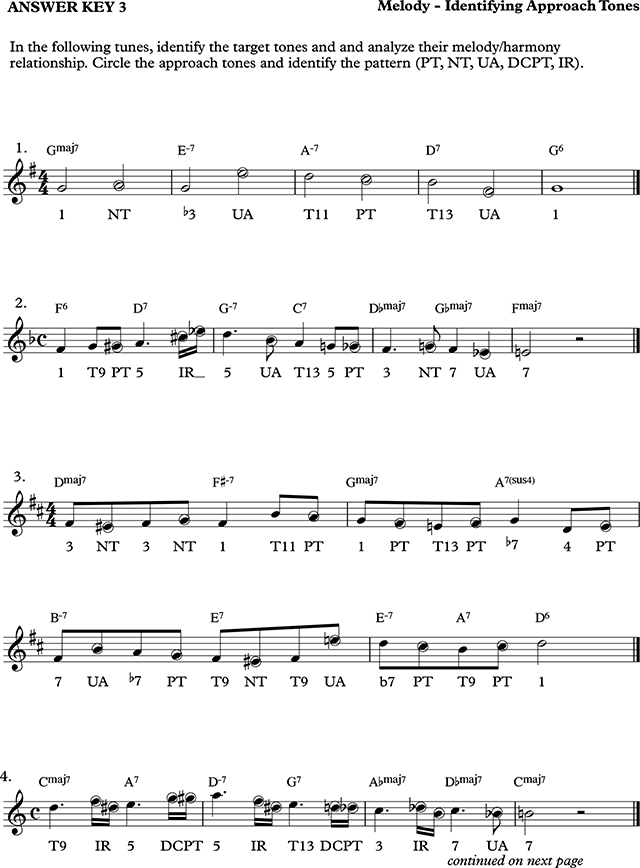
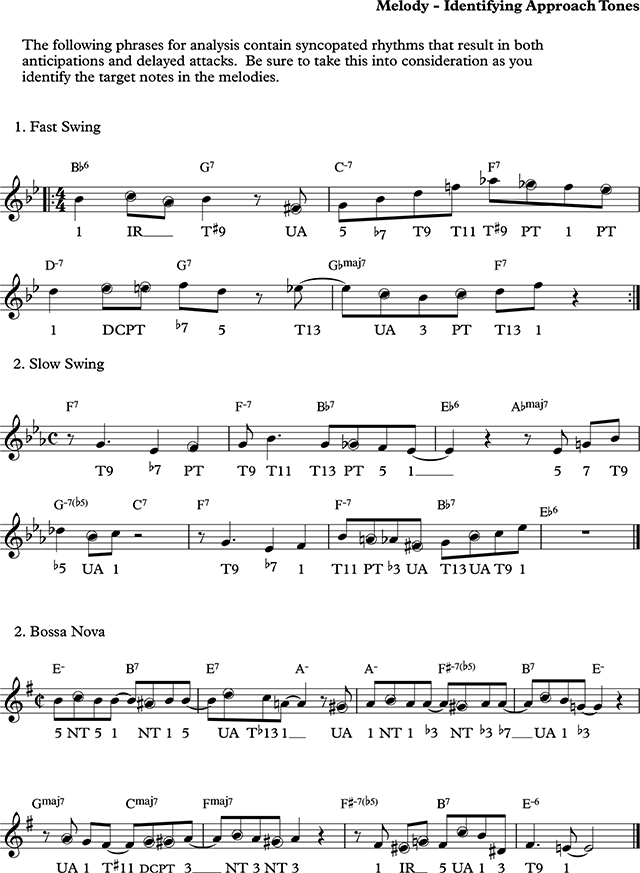
Download the attached PDF files and work through the exercises. Analyze the melodies and identify all of the potential approach tones. Check your work against the answer key provided.
Download Approach Tones worksheet 1 (PDF)
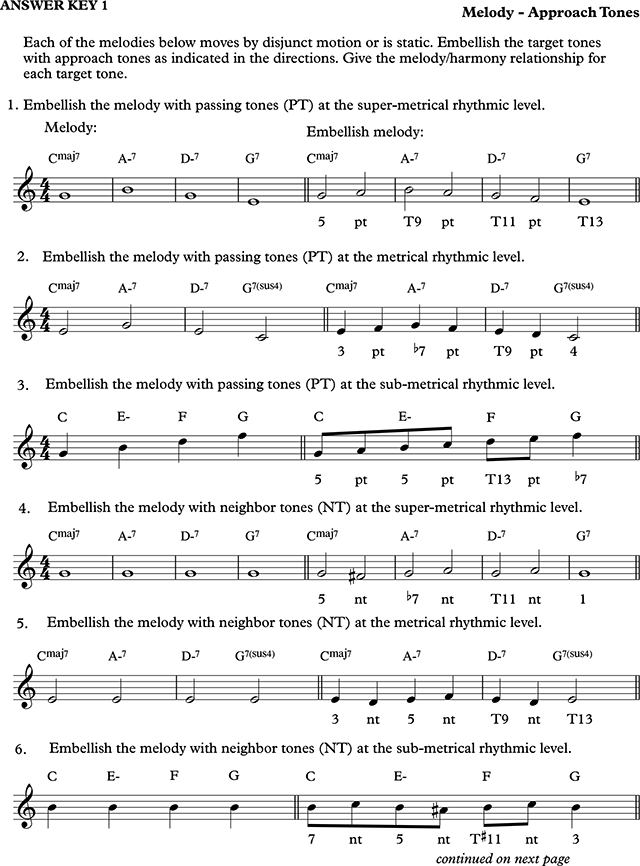
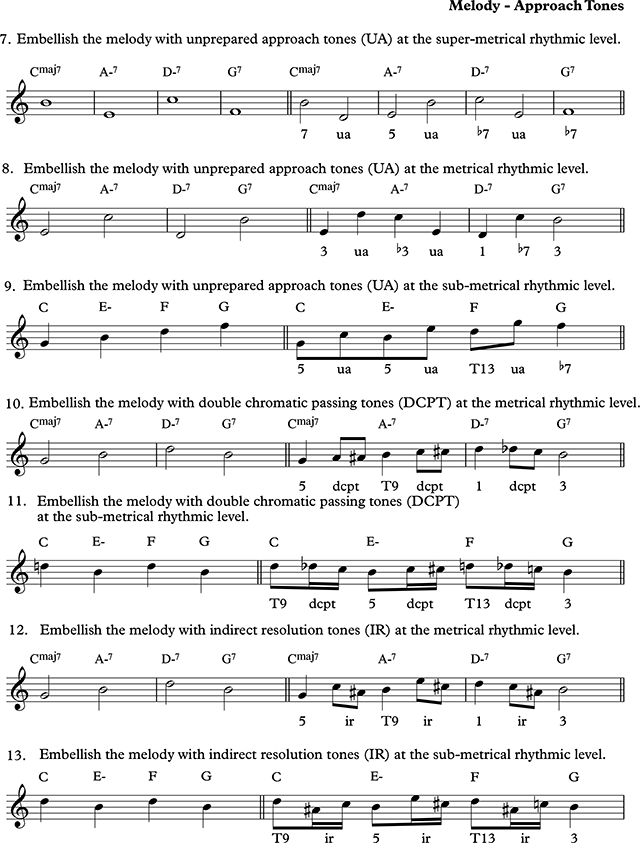
Download Approach Tones worksheet 2 (PDF)
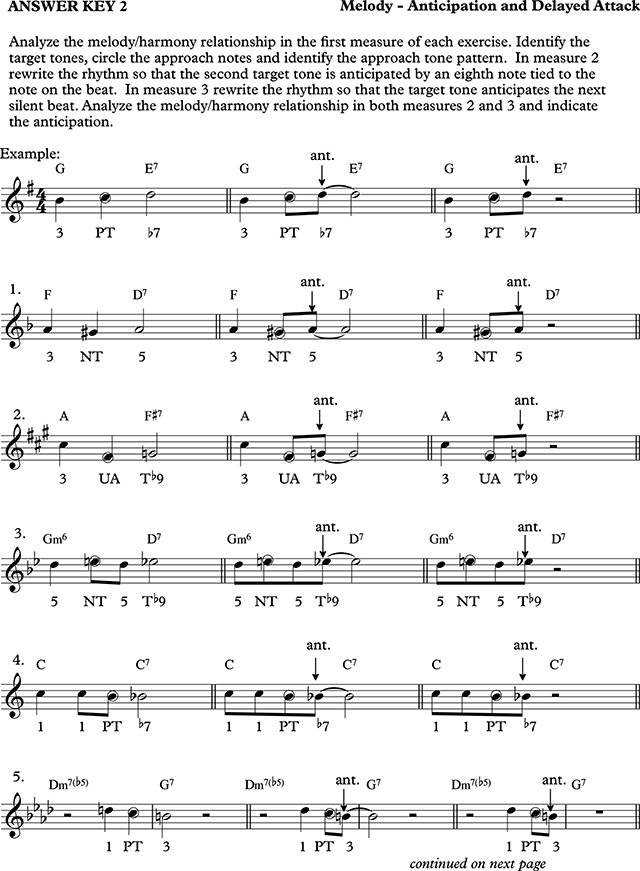
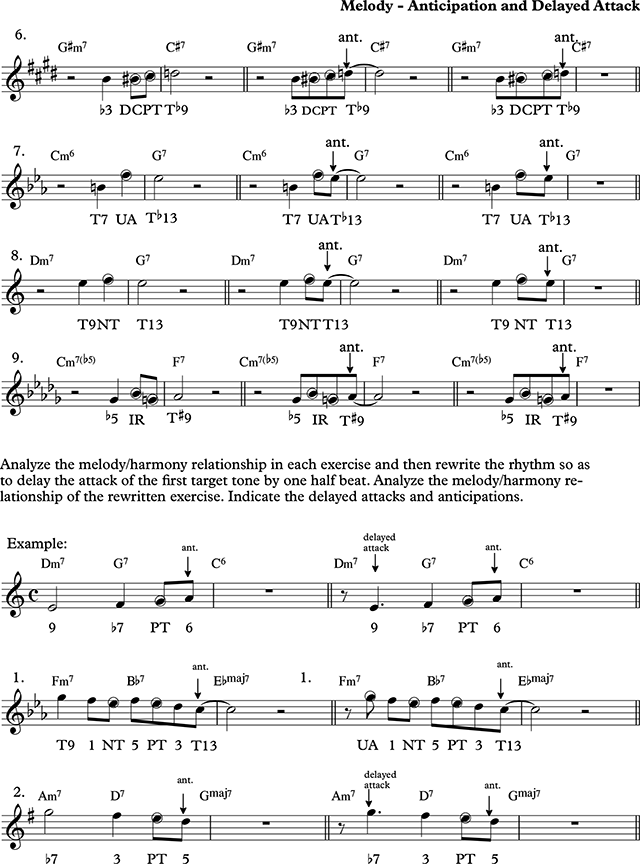
Download Approach Tones worksheet 3 (PDF)
Elaborating the Surface: An Introduction to Harmonizing Approach Tones
In the last topic we introduced the contemporary concept of approach tones and then embarked on an approach to identify them in a melody. In this topic we'll outline a process for harmonizing the approach tones, a technique common in the swing and jazz music of the 1930s to the 1960s. It is applicable to other styles as well. Any situation that involves a melody with stepwise motion can be embellished with this technique.
As you have learned, approach tones are generally thought of as the notes in a melody that come on weak metrical stresses. These tones gravitate by step to those notes that appear on strong metrical stresses. By harmonizing the approach tones, we can create an even stronger pull toward the target tones, creating both a stronger sense of forward-motion in each phrase and also a more elaborate, harmonically sophisticated sound for the composition as a whole.
How do we create harmonic forward-motion? Through the use of dominant function chords, of course. Approach tones may be harmonized with dominant, secondary dominant, substitute dominant as well as the ascending diminished and auxiliary diminished chords that create an expectation of resolution to each target. Additionally, chords that are identical in quality but a half step above or below the target note may be used to harmonize an approach tone. These are called chromatic approach chords.
So let's see this approach tone harmonization in action!
Dominant and Diminished Approaches
In the example below, we have an ascending scalar melody harmonized with a C6 chord. Each melody note is harmonized in four-way close voicings, conceived downward from the melody note. The bass line in the example is independent and alternates between the root and 5th of the C6 chord.
Linear Melody Harmonized with C6:
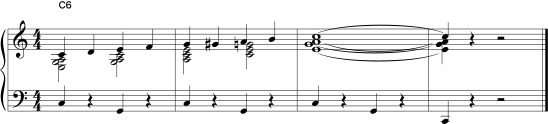
As you listen carefully, you can hear each of the approach tones rubbing against the prevailing C6 harmony and gravitating toward the target tones in strong metrical positions.
Melody Analyzed for Approach Tones:

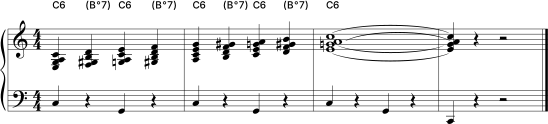
Dominant Approach
Let's harmonize each of the approach tones using the dominant of the targets. Each target tone is a chord tone of C6, so the chord that we'll use is G7. When we come to the G
Approach Tones Harmonized with V7/I:
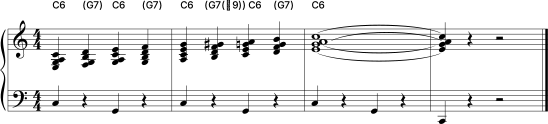
Diminished Approach
If you look carefully at the spelling of the second chord of the second measure in the previous example, you'll notice that the four notes spell a Bº7 chord or VIIº7/I in the key of C. Since each of the approach tones is a chord tone of Bº7 we can also harmonize each with the VIIº7 of C6 or Bº7.
Approach Tones Harmonized with VIIº7/I:
Notice how the added chromatic tones increase the pull of the approach tones to the target tones!
Chromatic and Diatonic Approaches
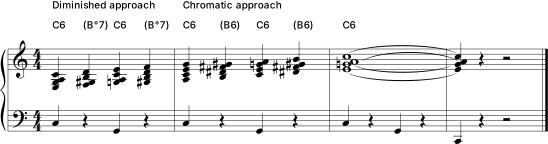
Chromatic Approach
In measure 2, we have yet another option. Because each approach tone is a half step below the target, we can harmonize them with a chromatic approach chord. A chromatic approach chord has the same quality as the target chord—but each chord tone is a half step below those of the target chord. The aural effect of chromatic approach is not unlike that of a whammy bar on an electric guitar—with all of the pitches "bending" by one half-step.
Diminished and Chromatic Approach Harmonizations:
Diatonic Approach
One more possible approach harmonization is to use the adjacent diatonic chord. Notice in the following example how the approach chords are harmonized with II and VII chords.
Diatonic Approach Harmonizations:
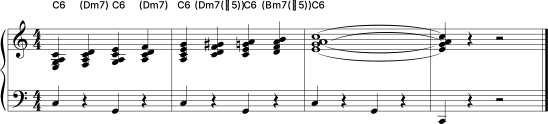
Another thing to note in all of the examples above is that the melody has been harmonized with approach chords while the bass remains independent and aligned with the prevailing harmony—C6.
Putting Approach Harmonization into Action
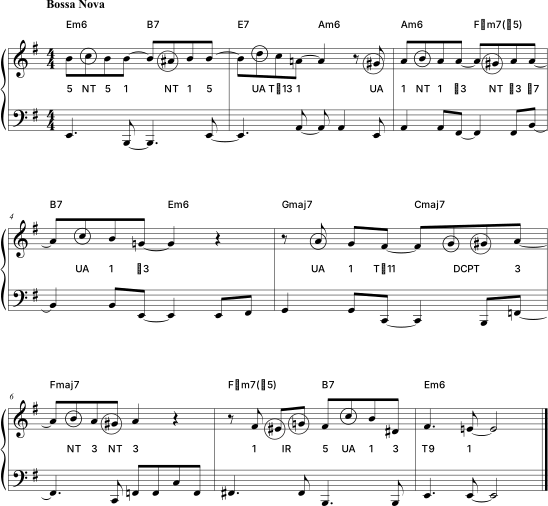
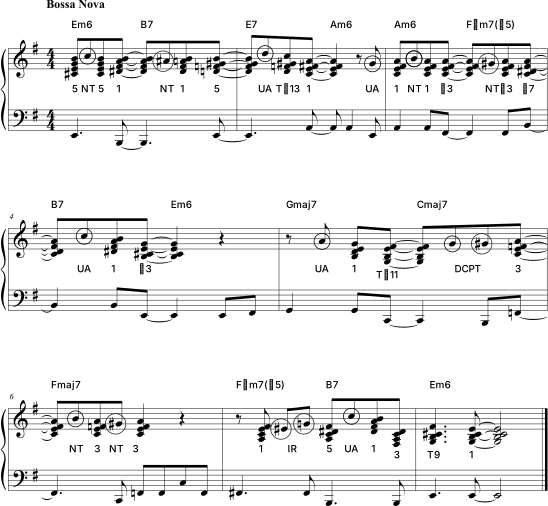
The melody below is an example from an earlier topic. We have given the approach tone analysis for the selection and also created an independent bass line in bossa nova style based on the chord changes.
Approach Tones Identified—Independent Bass Line:
Target Chord
The next step is to voice each target chord in four-way close position working down from the melody note. Our first chord is E-6. Chord tone 5 is in the melody. Working down from 5 we voice the rest of the chord tones: G, E, C
Prevailing Harmony Voiced Four-Way Close Down from Melody:
Listen to the audio clip and notice how each of the approach tones gravitates toward the prevailing harmony.
Identify the Possible Harmonizations
Our next task is to identify the possible harmonizations for each of the approach tones and to choose one. Our first neighbor tone on the "and" of beat 1 in measure 1 approaches E-6 downward by half step from the note C. This gives us a number of options because C is a chord tone in all of the following: diminished approach (D
Approach Options to E-6:
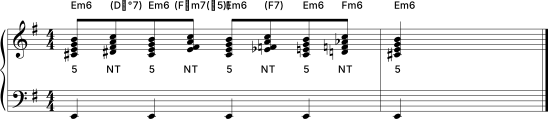
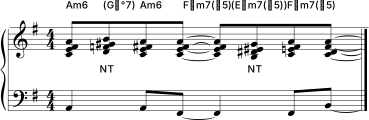
We'll choose diminished approach, but feel free to experiment with the others. Having many options allows you develop your own personal style! Next in measure 1 on the "and" of beat 3 we have a neighbor tone A
Dominant and Diminished Approach Options to B7:
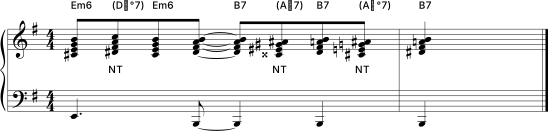
Once again we'll choose diminished approach for the sake of consistency.
In measure 2, the unprepared approach tone D moves toward an E7 chord with tensions
Measure 2: Substitute Dominant Approach F7 to E7:
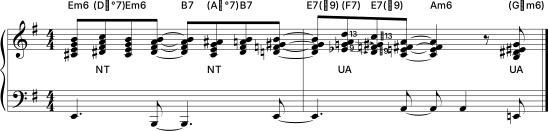
The unprepared approach on the "and" of beat 4 approaches A-6. Here G
In measure 3, the neighbor tone B presents a number of possible harmonizations: dominant approach (E7 is V7/A-6), diminished approach (G
Measure 3: Diminished and Parallel Approach:
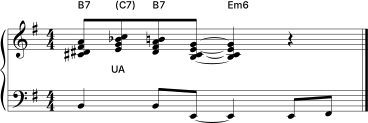
In measure 4, we have two options that turn out to be the same harmony: substitute dominant (C7 is subV/B7) and parallel approach (C7 to B7). Your choice!
Measure 4: Parallel Approach:
In measure 5, the unprepared approach tone A can be harmonized three ways: dominant approach (D7 is V7/G6), diminished approach (F
Measure 5: Diminished and Parallel Approach:
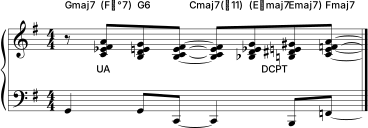
In the second half of the measure, the double chromatic passing tones present only one choice because of the melody notes. Thinking backward from the target chord Fmaj7, our approach tones will be harmonized with parallel approach. The result is E
Measure 6 has upper neighbor tone B approaching Fmaj7 with A in the lead—a whole step approach. Since the note B is not a chord tone of C7, Eº7, or G
Measure 6: Diatonic and Chromatic Approach:
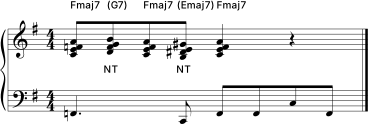
The G
In measure 7, we have an indirect resolution to B7
Measure 7: Chromatic Approach:
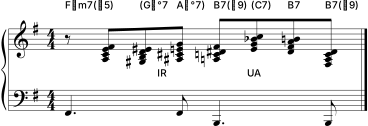
Finally the UA on the "and" of beat 3 is identical to the one in measure 4. We'll harmonize this with C7 as chromatic approach is the only option!
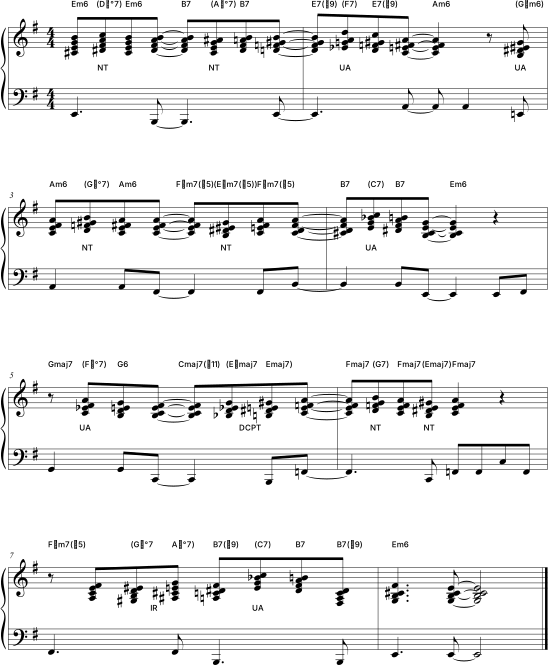
Now check out the whole passage complete with approach harmonies:
Approach Harmonization Complete:
Conclusion
In this topic we have explored possible options for harmonizing approach tones. Dominant, diminished, substitute dominant, diatonic, and chromatic approach harmonies can contribute to a more elaborate harmonic surface in an arrangement. Approach tone harmonization is a powerful technique that will add a new dimension to your music!
Workshop: Approach Tone Harmonization
Try your hand at approach tone harmonization. Download the PDF and harmonize the approach notes. First, determine your options: diminished, dominant, diatonic, or chromatic approach. Choose an approach option and voice the chords in four-way close spacing, working backward (down) from the melody note as in the topic demonstration. Check your answers against the answer key PDF provided.
Download Approach Tone Harmonization workshop (PDF)
Composers on Composing: Methods on Starting a Composition
This week, in Lesson 6, three more composers shared their thoughts on last week's composer question.
The question was: Do you start a composition by sketching or notating by hand, inputting notes into a DAW (Digital Audio Workstation), or straight into a notation program such as Finale or Sibelius?
Composers interviewed in week 6:
Winnie Dahlgren—Jazz composer
Michael Sweet—Video game and commercial music composer
Omar Thomas—Jazz composer
Recap
In lesson 6 you have learned how to:
understand the relationship of non-chord tones to the prevailing harmony
identify the different non-chord tones such as passing tones, neighbor tones, escape tones, free tones, appoggiatura, etc.
understand the distinction between classical non-chord tones and contemporary approach tones
identify approach tone patterns and recognize them in context
understand a basic process for harmonizing approach tones in a melody
understand and comment on how a selection of professional composers control dissonance and consonance in their compositions using tensions and non-chord tones
For lesson 7, we will be diving into the use of upper structure triads and polychord voicings in your compositions.